
May 2026 Texas LPC Board Meeting Recap: Key Updates for Texas Counselors, Supervisors, and LPC Associates
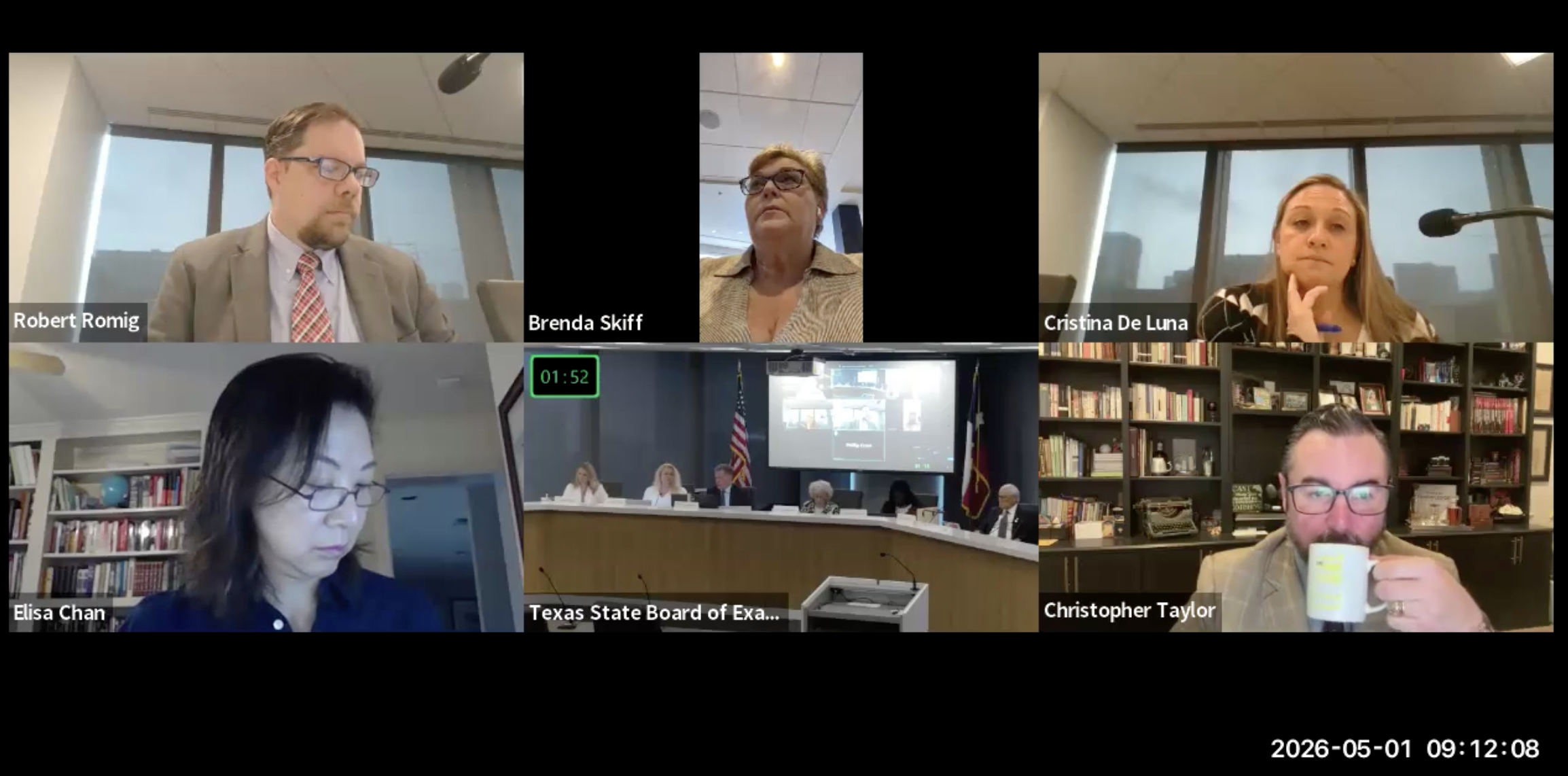
The May 1, 2026 Texas LPC Board meeting:
Board members, staff, and stakeholders convened to discuss licensure updates, policy developments, and key regulatory priorities impacting Texas LPCs.
The Texas State Board of Examiners of Professional Counselors convened on May 1, 2026, for its quarterly full board meeting, covering several significant updates that may impact Texas LPCs, LPC Associates, supervisors, and future applicants.
As with prior meetings, much of the discussion centered on public protection, regulatory clarification, and modernization of professional standards. For clinicians, supervisors, and those navigating licensure pathways, this meeting offered important insight into the evolving expectations of practice in Texas.
Major Themes from the May 1 Meeting
1. Continued Regulatory Clarification and Professional Standardization

Unfamiliar with the BHEC Rulemaking Process?
Here’s a map that delineates the process.
Source: https://bhec.texas.gov/wp-content/uploads/2023/03/BHEC-Rulemaking-Process-Map-20230327.pdf
The rulemaking process utilized by the Council is set out in 22 TAC 881.20.
A substantial portion of the meeting focused on proposed rule amendments intended to clarify existing standards, modernize language, and strengthen public protection.
Key proposed changes included:
New Rule §681.32 – Competency and Professional Judgments
This proposed rule would more explicitly define counselor competency obligations, reinforcing that licensees must:
Practice only within areas of education, training, and demonstrated competence
Consider client diversity factors such as age, culture, disability, language, and socioeconomic status
Base professional judgments on current scientific and professional knowledge
Seek additional supervision, consultation, or education before practicing in unfamiliar or emerging specialty areas
Withdraw and refer when competence is insufficient
Ensure assessments, evaluations, and testing practices are scientifically grounded and ethically sound
Why this matters:
This rule appears designed to strengthen ethical accountability and formalize what many clinicians already understand as best practice: competency is dynamic, not static.
For supervisors especially, this may increase emphasis on documentation of competence development, scope-of-practice boundaries, and remediation when supervisees move into unfamiliar populations or interventions.
2. LPC Associate Rule Amendments (§681.91)
Several noteworthy clarifications were proposed regarding LPC Associate practice:
Proposed updates include:
Associates cannot provide counseling services without active licensure
Hours accrued before licensure will not count
Associates may own a private practice only under supervision
Associates must notify supervisors of pending complaints within 15 business days
Associates with remediation plans must disclose those plans to current and future supervisors
All materials must clearly reflect Associate status and supervisory relationship
Practical implications:
These revisions appear aimed at improving transparency, public awareness, and supervisor oversight.
For Associates, this reinforces the seriousness of compliance, marketing accuracy, and ethical responsibility.
For supervisors, this may require stronger onboarding procedures, remediation tracking, and documentation systems.
3. Supervision Rule Changes (§681.92 & §681.93)
Supervision remains an area of increasing board attention.
Notable proposed revisions:
Supervision requirement language would shift to an average of four hours monthly rather than minimum monthly requirement
Supervisors must establish a formal records custody plan in case of death, incapacity, or termination
Supervisors cannot charge for supervision if supervision is already part of paid employment duties
Supervisors must maintain more robust remediation and payment documentation
Supervisor status revocation now includes clearer procedures, obligations, and reapplication requirements
Associates may receive credit for some doctoral-level supervised experience under qualifying circumstances
Why this matters:
This signals ongoing board prioritization of supervision quality, structure, and accountability.
WisePractice perspective:
These changes reinforce the need for supervisors to move beyond informal mentorship models into highly structured, ethically rigorous supervisory systems with clear policies, documentation, and contingency planning.
Enforcement Trends: Ethical Boundaries Remain Central
The board reviewed multiple disciplinary actions involving:
Sexual misconduct
Boundary violations
Improper relationships with former clients or students
Documentation failures
Failure to report abuse
Recordkeeping deficiencies
Professional misconduct involving text communication and confidentiality breaches
Sanctions ranged from:
Reprimands
Suspensions
Practice restrictions
Mandatory professional development
Permanent license surrender/resignation
Clinical takeaway:
Boundary management, documentation integrity, and ethical vigilance remain critical areas of board scrutiny.
Supervisors should continue emphasizing:
Documentation quality
Boundary ethics
Reporting obligations
Dual relationship awareness
Risk management
Examination Updates
The board also discussed:
Jurisprudence exam revisions
Potential expansion of NBCC Spanish-language exam administration
Potential impact:
This could improve accessibility while maintaining licensing standards, particularly for bilingual clinicians and diverse populations.
Operational Updates
Additional highlights included:
CE Broker is now required for CE reporting (read more here)
Ongoing discussion of standardized annual rulemaking windows
Expanded full-board participation in ISC processes
Continued modernization of board systems and procedures
WisePractice Takeaways for Texas Clinicians
For LPC Associates:
Ensure all licensure, supervision, and marketing materials are fully compliant
Maintain transparency with supervisors
Understand remediation obligations
Prioritize documentation and ethical consistency
For Supervisors:
Strengthen supervisory contracts and policies
Review documentation systems
Establish contingency plans for records
Prepare for increasing regulatory expectations
Provide more structured remediation and oversight processes
For Fully Licensed LPCs:
Reassess scope of competence
Maintain updated specialty knowledge
Ensure assessments and professional judgments are evidence-based
Stay current with rule changes
Final Thoughts
The May 1, 2026 LPC Board meeting reflects a broader trajectory in Texas counseling regulation:
Greater clarity. Greater accountability. Greater structure.
For ethical clinicians and supervisors, these updates are less about restriction and more about professional maturation.
As the profession continues to evolve, Texas counselors are increasingly called to practice with both relational depth and operational excellence.
At WisePractice Institute, we view these shifts as an opportunity to strengthen the profession, support supervisees more effectively, and cultivate supervision practices rooted in wisdom, ethics, and sustainable leadership.
Stay Connected
WisePractice Institute will continue monitoring Texas LPC board meetings and regulatory developments to help clinicians, supervisors, and Associates stay informed.
Because wise practice requires more than compliance—it requires clarity, competence, and intentional growth.
For ongoing board recaps, ethics updates, and supervision policy analysis, stay tuned to the Collective Wisdom Blog.
Subscribe to the WisePractice newsletter for grounded, practical guidance — translating board decisions into real-world clinical and supervisory practice.

Questions? Topics you'd like us to cover in 2026? Let us know in the comments.
Guided by Wisdom. Rooted in Practice. Grown with Passion.
A Quick Disclaimer (Because It Matters)
This recap is intended for informational and educational purposes only and reflects a summary interpretation of the meeting. It is not an official transcript, legal opinion, or regulatory directive. Licensees are responsible for reviewing board rules, statutes, and formal guidance directly through the Texas Behavioral Health Executive Council (BHEC) and their respective Board(s). For specific legal, ethical, or licensure questions, consult the relevant statutes, administrative code, or qualified legal counsel.